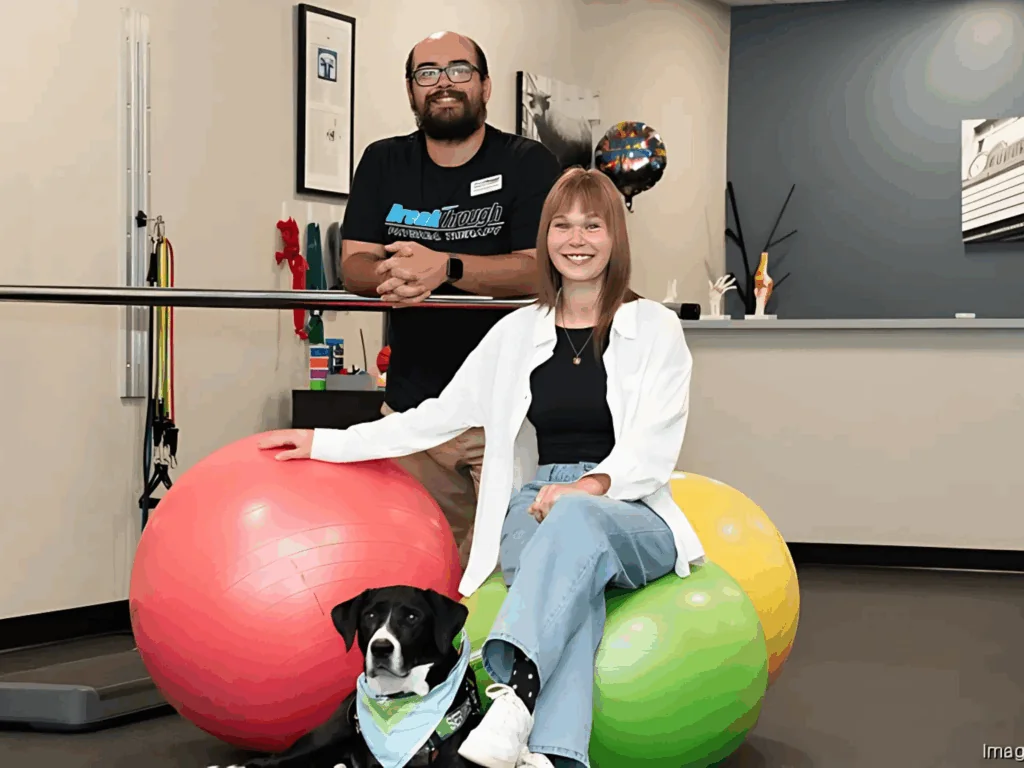
In the recent GQ article Heated Rivalry’s Hudson Williams Uses This Overlooked Piece of Gym Equipment to Shape His Butt, actor Hudson Williams credited the belt squat machine, often known by the brand Pit Shark, for building his glutes. Featured in the piece was our very own Dr. Alex Corbett, PT, DPT, of BreakThrough Physical Therapy, who explained why this “old-school” exercise deserves renewed attention.
What Is a Belt Squat?
A belt squat loads weight at the hips instead of across the shoulders like a traditional back squat. The lifter wears a belt attached to a lever or pulley system, allowing them to squat without placing a barbell on the spine.
The result: targeted lower-body loading with less stress on the low back.
Why the Belt Squat Is Effective for Glute Growth
1. Greater Glute Focus
According to Alex, one limitation of barbell back squats is that the lower back often becomes the “weak link” before the glutes are fully fatigued.
By shifting the load to the hips, the belt squat reduces spinal strain and allows lifters to:
- Train closer to muscular failure
- Load the glutes more directly
- Increase training stimulus safely
2. Improved Depth and Range of Motion
Most belt squat machines include handles for support. This added stability allows many people to squat deeper, an important factor in maximizing glute hypertrophy and strength gains.
3. Reduced Lower Back Stress
Because the weight is not compressing the spine, belt squats can:
- Decrease lumbar strain
- Reduce injury risk
- Support higher training volume
For individuals managing back discomfort or building capacity safely, this can be a significant advantage.
Belt Squat vs. Back Squat: Which Is Better?
Both.
While the belt squat is excellent for glute-focused strength training, it does not challenge the core, upper back, and balance demands to the same degree as a traditional barbell back squat.
From a performance and rehabilitation perspective, these movements are complementary tools, not replacements for one another.
The Takeaway
Whether you’re training for performance, aesthetics, or injury prevention, understanding how to load the body safely and effectively matters. The belt squat isn’t new, but it may be one of the most underutilized tools for building glute strength while protecting the spine.